

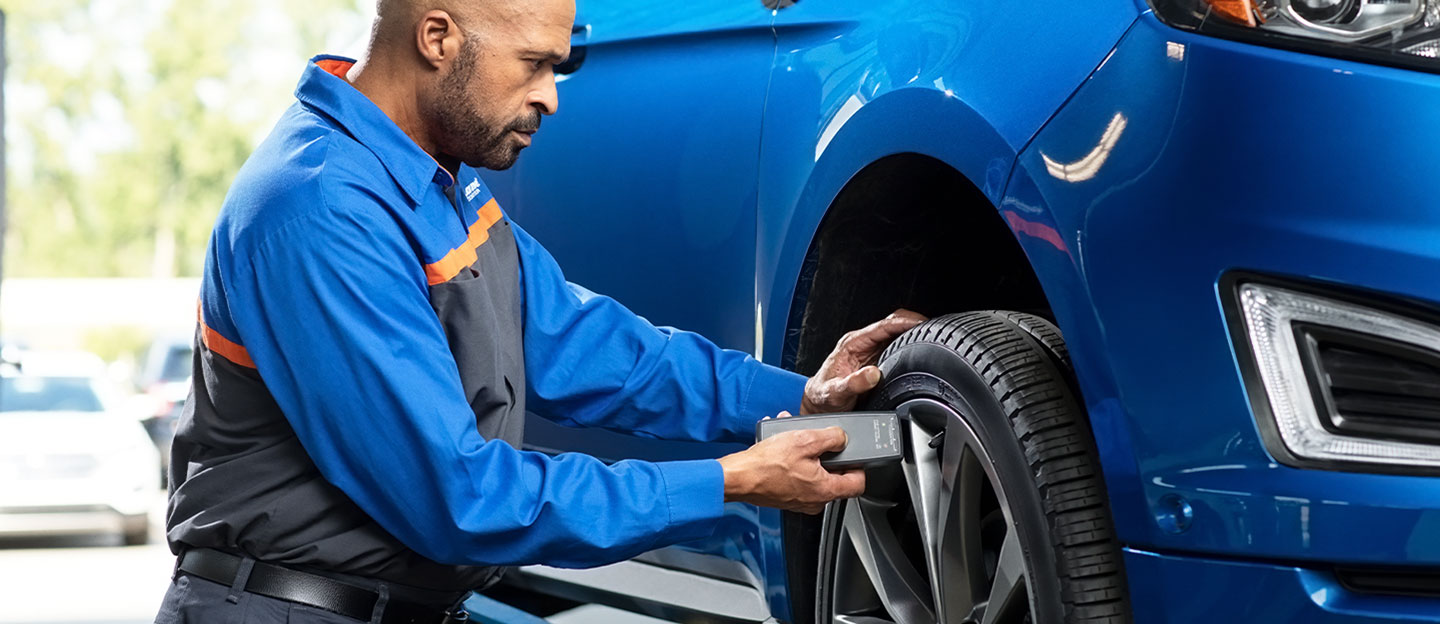
The quality of a vehicle’s engineering is often judged by the elements drivers can see and touch, such as the design of the cabin, the technology on display, and the way a vehicle accelerates or corners. However, some of the most important engineering decisions are found much closer to the road, where performance and safety are ultimately determined. That is why routine inspections and maintenance at our certified Ford service center play such an important role in long-term vehicle performance.
Your tires are the only components connecting your Ford to the pavement. Every steering input, braking maneuver, and mile traveled relies on four contact patches, each remarkably small considering the responsibility they carry. Understanding tire safety standards is ultimately about understanding how that connection is maintained and optimized for safety and performance.
Why Tire Ratings Exist
Modern tires are asked to perform an extraordinary number of tasks simultaneously. They must provide grip in dry conditions, maintain stability in heavy rain, support substantial loads, and withstand years of exposure to heat, weather, and changing road surfaces. Tire ratings exist to help consumers understand how well a tire is designed to perform those tasks.
The Uniform Tire Quality Grading system evaluates tires in three primary areas: treadwear, traction, and temperature resistance. Treadwear ratings provide an indication of expected longevity, traction grades offer insight into wet-surface performance, and temperature ratings evaluate how effectively a tire manages heat generated during operation. While these figures may appear technical, they serve a practical purpose by helping drivers select tires that complement both their vehicle and the conditions in which it will be used.
The Importance of Routine Inspection
Well-designed components still require attention. Regular tire inspections remain one of the simplest and most effective ways to maintain vehicle safety. Tread depth, inflation pressure, and overall tire condition all contribute to how a vehicle behaves in everyday driving situations.
As tread depth decreases, a tire becomes less effective at dispersing water from beneath its contact patch. Braking distances can increase, particularly in wet conditions, and overall grip may be reduced. The sidewall also deserves equal attention, as cracks, bulges, or visible damage can indicate structural concerns that warrant professional evaluation. These issues are often subtle at first, which is why periodic inspections are so important.
Tire Pressure Is More Important Than Many Realize
Few maintenance items influence vehicle performance as directly as tire pressure. A tire operating below its recommended pressure can generate excess heat, wear unevenly, and compromise fuel efficiency. Excessive pressure can alter ride quality and reduce the tire’s contact area with the road surface.
Ford engineers specify tire pressures based on a vehicle’s weight, suspension calibration, and intended performance characteristics. These recommendations can be found on the driver’s door jamb and should be viewed as part of the vehicle’s overall engineering design rather than a simple suggestion. Checking tire pressure regularly remains one of the most beneficial habits any driver can develop.
Age Matters Alongside Tread Depth
One of the more overlooked aspects of tire ownership is age. A tire may appear healthy and still possess substantial tread depth, yet time gradually affects the rubber compounds from which it is made. Exposure to sunlight, temperature fluctuations, and environmental conditions slowly alters the material’s properties.
This is why manufacturers recommend monitoring tire age in addition to visible wear. The manufacturing date can be found within the DOT code on the sidewall, providing valuable information about a tire’s service life. Like many engineered products, tires are designed with both mileage and time in mind.
Choosing the Right Tire for Your Ford
Every Ford vehicle is developed around specific tire specifications. A Ford F-150® has different requirements than an Escape®, while an Expedition® places different demands on its tires than a Mustang®. Load capacity, handling characteristics, ride quality, and overall vehicle dynamics are all influenced by tire selection.
Choosing replacement tires that align with the original specifications helps preserve the balance engineers intended when the vehicle was developed. The goal is not simply finding a tire that fits the wheel, but selecting one that supports the vehicle’s broader design philosophy.
Confidence Begins Where the Tire Meets the Road
Tires rarely attract much attention when everything is working properly, and in many ways that quiet performance is a testament to their design.Drivers throughout Benton, AR can rely on the team at Everett Ford for tire inspections, rotations, balancing, alignments, and replacement services. A professional evaluation can help ensure that your Ford continues to perform as its engineers intended, maintaining the connection between vehicle and road that makes every journey possible.
Connect with us


